Initial study on the application of deep learning to the Gravitational Wave data analysis
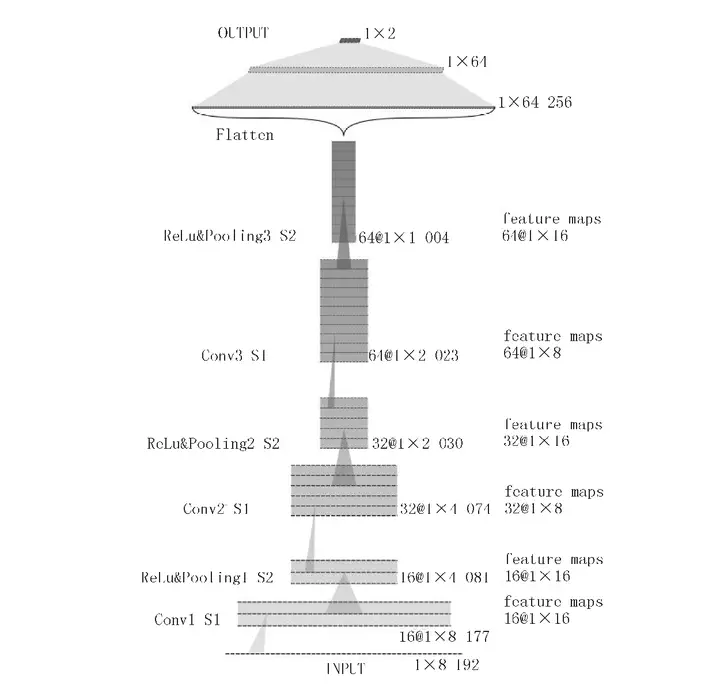 网络结构示意图
Overview
This pioneering work represents one of the earliest systematic explorations of deep learning applications in gravitational wave data analysis. Published as LIGO was beginning to detect multiple gravitational wave events, this study anticipated the coming big data era in gravitational wave astronomy and proposed deep learning as a transformative approach to address computational and discovery challenges that traditional matched filtering methods face.
Historical Context
The Dawn of Gravitational Wave Astronomy
By early 2018, LIGO had confirmed 6 gravitational wave detections:
- GW150914 (first detection, September 2015)
- GW151226 (December 2015)
- GW170104 (January 2017)
- GW170608 (June 2017)
- GW170814 (August 2017, with Virgo)
- GW170817 (August 2017, neutron star merger with electromagnetic counterpart)
The field was rapidly transitioning from discovery phase to astronomy phase, with expectations of many more detections to come.
Motivation for New Approaches
Traditional matched filtering, while successful, faced challenges:
- Computational cost scaling poorly with detection rate
- Requirement for accurate theoretical waveform templates
- Potential to miss unexpected signal types
- Need for human intervention in candidate evaluation
Deep learning offered potential solutions to these emerging challenges.
Key Contributions
1. Framework for Deep Learning in GW Data Analysis
The paper establishes a comprehensive framework addressing:
Network Architecture Design:
- Convolutional neural networks for time-series and spectrogram data
- Appropriate input representations (strain data, time-frequency transforms)
- Network depth and complexity considerations
- Balance between expressiveness and computational efficiency
Training Data Preparation:
- Synthetic signal injection into noise
- Realistic noise characteristics from detectors
- Parameter space coverage for training set
- Data augmentation strategies
- Balance between signal and noise samples
Training Optimization:
- Loss function selection for imbalanced data
- Regularization to prevent overfitting
- Optimization algorithms and learning rates
- Convergence criteria
- Computational resource requirements
2. Analysis of Deep Learning Advantages
The study identifies key benefits over matched filtering:
Computational Speed:
- Neural network inference much faster than template matching
- Parallelizable on GPUs
- Real-time analysis feasible
- Scalable to higher detection rates
Template-Free Detection:
- Learn signal characteristics from data
- Not limited to theoretical waveform families
- Potential to discover unexpected signals
- Robustness to waveform modeling errors
End-to-End Learning:
- Automatic feature extraction
- No manual feature engineering required
- Adaptive to data characteristics
- Potential for simultaneous detection and parameter estimation
3. Challenges and Considerations
The paper honestly addresses difficulties deep learning faces:
Generalization Ability:
- Training on simulated data, testing on real signals
- Distribution shift between training and real data
- Extrapolation beyond training parameter ranges
- Validation strategies
Data Representation:
- Choice of input representation (time domain, frequency domain, time-frequency)
- Preprocessing and normalization
- Handling of detector glitches and artifacts
- Multi-detector data combination
Feature Occlusion:
- Robustness when parts of signal are corrupted
- Handling detector downtime or noise artifacts
- Graceful degradation in challenging conditions
- Interpretability of network decisions
Network Architecture:
- Designing appropriate structures for gravitational wave signals
- Balancing complexity and generalization
- Incorporating physical knowledge
- Avoiding overfitting to noise characteristics
Technical Approach
Network Design Principles
The study explores architectural choices:
Convolutional Layers:
- Local feature extraction
- Translation invariance in time
- Hierarchical feature learning
- Efficient parameter sharing
Input Representations:
- Raw time series strain data
- Whitened data emphasizing signal frequencies
- Spectrograms and scalograms
- Multi-resolution representations
Output Design:
- Binary classification (signal present/absent)
- Multi-class for signal types
- Regression for parameter estimation
- Uncertainty quantification
Training Methodology
Data Generation:
- Numerical relativity waveforms for mergers
- Post-Newtonian approximations
- Noise from detector characterization
- Realistic glitch modeling
Optimization Strategies:
- Stochastic gradient descent variants
- Learning rate schedules
- Batch size selection
- Early stopping and validation
Evaluation Metrics:
- Detection efficiency vs. false alarm rate
- ROC curves and AUC
- Sensitivity as function of signal parameters
- Comparison with matched filtering benchmarks
Results and Implications
Performance Characteristics
The preliminary exploration demonstrates:
- Neural networks can achieve high detection efficiency
- Computational speedup of orders of magnitude
- Potential for real-time analysis
- Robustness to certain types of noise artifacts
Comparison with Matched Filtering
Advantages:
- Much faster inference
- No template bank required
- Potential for unexpected signal discovery
- Parallelizable architecture
Trade-offs:
- Requires extensive training data
- Less interpretable decision making
- Validation challenges
- Sensitivity to training distribution
Future Potential
The study anticipates several developments:
- Improved architectures as field matures
- Hybrid approaches combining deep learning and physics
- Extension to parameter estimation and source characterization
- Multi-messenger astronomy applications
Significance and Impact
Pioneering Work
This paper is significant as:
- Among the First: One of earliest systematic studies of deep learning for GW analysis
- Comprehensive: Addresses full pipeline from data preparation to validation
- Prescient: Anticipated challenges that later became research focus
- Foundational: Influenced subsequent research directions in the field
Influence on Field Development
The work contributed to:
- Establishment of deep learning as viable GW analysis tool
- Framework for subsequent research
- Identification of key technical challenges
- Integration of AI into gravitational wave astronomy
Methodological Contributions
For Gravitational Wave Community:
- New tools complementing traditional methods
- Framework for incorporating machine learning
- Validation strategies for AI approaches
- Bridge between physics and computer science
For Machine Learning Community:
- Novel application domain
- Unique challenges (weak signals, physical constraints)
- Opportunity to combine domain knowledge with learning
- High-stakes scientific application
Subsequent Developments
Since this pioneering work, the field has evolved rapidly:
Architectural Advances:
- More sophisticated network designs
- Attention mechanisms
- Recurrent networks for time series
- Transformer architectures
Expanded Applications:
- Glitch classification and removal
- Parameter estimation with neural networks
- Data quality assessment
- Waveform generation and modeling
Operational Deployment:
- Deep learning tools integrated in analysis pipelines
- Contribution to actual detections
- Real-time alert generation
- Multi-messenger astronomy coordination
Theoretical Understanding:
- Better understanding of what networks learn
- Interpretability methods
- Robustness analysis
- Uncertainty quantification
Broader Context
AI in Physical Sciences
This work exemplifies the broader trend of:
- Machine learning transforming scientific data analysis
- AI complementing traditional theoretical and computational methods
- New paradigms in discovery and inference
- Interdisciplinary collaboration
Big Data in Astronomy
Gravitational wave astronomy shares challenges with:
- Next-generation surveys (LSST, SKA)
- Particle physics experiments (LHC)
- Climate science
- Genomics
Deep learning offers general strategies applicable across these domains.
Future of Gravitational Wave Science
The integration of AI anticipated in this work has become reality:
- LIGO/Virgo/KAGRA use machine learning operationally
- Deep learning contributes to detection pipelines
- AI assists in source characterization
- Future detectors (Einstein Telescope, Cosmic Explorer) will rely even more heavily on advanced data analysis
Lessons and Insights
Technical Lessons
- Deep learning is viable for weak signal detection
- Careful validation essential when learning from simulations
- Computational efficiency is achievable
- Domain knowledge should inform architecture design
Scientific Lessons
- AI can complement rather than replace traditional methods
- Interpretability important in scientific applications
- Synergy between physics and machine learning
- New tools enable new discoveries
Methodological Lessons
- Rigorous comparison with established methods crucial
- Training data quality determines performance
- Generalization must be carefully validated
- Interdisciplinary expertise required
This pioneering exploration laid important groundwork for the now-flourishing field of AI in gravitational wave astronomy, anticipating challenges and opportunities that continue to shape research today. It demonstrated that deep learning could address fundamental limitations of traditional methods while identifying the careful validation and domain knowledge integration required for success in scientific applications.